About Me
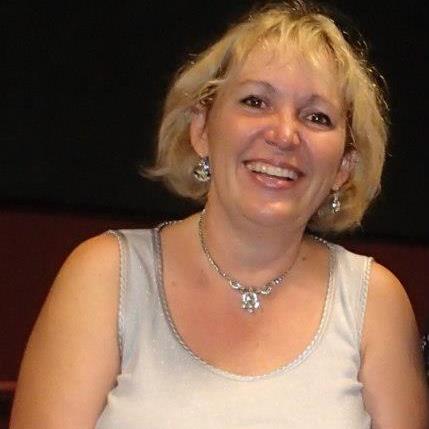
I am a 10-time award-winning journalist, including having received the 2022 Folio:Eddie and Ozzie Award and the 2022 AZBEE national Bronze Award of Excellence and Mid-Atlantic Region Silver Award for my stories for an e-book for EMS World magazine, '9/11: 20 Years Later'. Journalism has been in my blood ever since I was in junior high school, where I served as the editor of the student newspaper. I went on to become the editor of my high school newspaper. During my senior year of high school, I landed a job at my hometown weekly newspaper - The Wyandotte News-Herald. From there, I attended Central Michigan University, where I worked as a copy editor and a reporter on the student newspaper, CM LIFE, and executed an internship at the Saginaw News until I graduated with honors and a Bachelor's Degree in Journalism, with minors in political science and psychology. I then took a job as a reporter at the now-defunct Scripps-Howard newspaper The Hollywood Sun-Tattler in Hollywood, Florida. After two years, I was hired at the Fort Lauderdale News and Sun-Sentinel (now called the South Florida Sun-Sentinel) where I covered politics, religion, human interest features and education. I won the Newsmaker Award from the Florida Teaching Profession/National Education Association for Distinguished News Coverage of Public Education in Florida. My work has also appeared in the award-winning PRIME magazine and Water & Wastes Digest. In 1991, I established a business as a freelance writer and have developed specialties in B2B, writing primarily about emergency medicine, dentistry, the environment,construction, infrastructure, school transportation, landscaping, and some consumer-facing articles. I have earned honors in the Cassell Network of Writers/Florida Freelance Writers Association writing competitions. I am a member of the Society of Professional Journalists, the Society of Environmental Journalists, the American Society of Business Publication Editors, the American Society of Journalists and Authors, and the Association of Health Care Journalists.
AWARDS
2025 AZBEE Awards of Excellence Mid-Atlantic Region Silver Award of Excellence for an Irrigation & Lighting story on 'Building a Better Culture' in the Diversity, Equity, and Inclusion category.
2024 AZBEE Awards of Excellence Heartland Region Bronze Award for a Waste Today story on sustainable aviation fuel
2022 Folio:Eddie and Ozzie Awards Winner for '9/11: 20 Years Later' (EMS World magazine)
2022 AZBEE Awards of Excellence National Bronze Award and Mid-Atlantic Region Silver Award for '9/11: 20 Years Later' (EMS World magazine)
Writer for Water & Wastes Digest, 2022 winner of the James Neal Best Media Brand for Overall Editorial Excellence
2020 FOLIO Eddie & Ozzie Award for Full Issue (March 2020 PRIME magazine)
READ WHAT OTHERS HAVE WRITTEN ABOUT ME
MVP: [AWARD-WINNING] journalist's 200+ portfolio SECRETS
Q&A with Carol Brzozowski
The Question Mark
By Sarah Dolezal M.A.
Meet Carol Brzozowski, an award-winning career journalist and independent writer. Carol is a member of the Society of Professional Journalists, the Society of Environmental Journalists, the Association of Health Care Journalists, the American Society of Journalists and Authors, and the American Society of Business Publication Editors, for which she serves on its board of directors.
Getting Started in Freelance Journalism
Sarah Dolezal: What made you decide to leave traditional newsrooms behind and strike out on your own as a freelance journalist?
Carol Brzozowski: At the newspaper for which I worked, I did not feel that I was getting the type of assignments that aligned with my experience. As an independent journalist, I could choose the media outlets for which I wanted to work, pitch story ideas, and accept assignments that leveraged my expertise.
As it turned out, being an independent journalist made me one of the original work-from-home parents long before the COVID-19 lockdown became a driving factor in working from home, so I was able to work from home while raising my two children.
SD: Looking back at your early freelance days, what's one thing you wish someone had told you before you leaped?
CB: I really don't have any 'wishes' in this regard that would have dissuaded me from pursuing a career as an independent journalist. I always advocate for the fact that those of us who came out of a solid journalism background are no different in executing our craft, whether we do it as a W2 or 1099 worker.
The upside is when the economy is not solid, and full-time staff journalists are getting laid off or losing their jobs when their company goes under, an independent journalist in that situation doesn't lose their entire revenue stream – just one that they'll have to replace.
The Business of Freelance Writing
SD: How do you balance the creative side of journalism with the business realities of invoicing, pitching, and chasing payments?
CB: I have very few challenges in this regard. I complete my work and send the invoice. One business reality that independent journalists have to keep in mind is to set aside money for quarterly taxes and make sure it's a line item in your budget, or you may face the end of the year with taxes due.
Freelancers also should understand what they can and cannot deduct on their taxes and keep receipts. For instance, items related to your home office are tax-deductible.
SD: Walk me through your typical pitch process. What makes an editor actually open your email and say yes?
CB: Editors get numerous emails on a daily basis, including letters of introduction. The subject line is key to enticing an editor to perhaps open the email. My subject line reads: 'Letter of introduction from an award-winning career journalist.' In my email, I note that my work has appeared in more than 200 media outlets. I point out that before becoming an independent journalist, I spent 10 years as a daily newspaper reporter.
My background as a daily newspaper reporter ensures I can handle any assignment, any topic, meet deadlines, and produce crisp, clean copy, resulting in less time investment of my editors in having to get it to publication. I tape my interviews with Otter AI software and with the source's permission to ensure accuracy.
SD: You've written for countless publications over the years. How has your approach to finding and securing clients evolved since you started?
CB: I hold memberships in different writing groups, some of which publish job postings frequently. I hold membership in the American Society of Business Publication Editors, the Society of Professional Journalists, the Association of Health Care Journalists, the Society of Environmental Journalists, and the American Society of Journalists and Authors. They all offer webinars, job postings, educational information, and awards.
Finding clients can be a challenge for freelancers (and laid-off full-time staffers) because there seems to be more people seeking work than there are available job opportunities. Tariff uncertainties are causing many media outlets to operate on very tight budgets – if people are cutting back on their spending due to price increases, advertisers are pulling back as well.
In my experience, once I get a client, we tend to have a long-term relationship until that media outlet may become part of a merger or acquisition or go under completely. It's always a good idea to spend a few hours a week marketing, even if you're busy with other work, because a client with whom you work today may not be in existence at some point down the road.
Advocacy and Industry Leadership
SD: As a board member of the American Society of Business Publication Editors representing freelancers, what issues keep you up at night when it comes to protecting freelance journalists?
CB: I want independent journalists to be taken seriously. I get the fact that staff writers have demonstrated their capabilities and have been vetted before being hired. I do hear about some freelancers having 'imposter syndrome' when it comes to working in journalism, and to be frank, there are many independent journalists who don't feel that way with whom those with 'imposter syndrome' are competing, so it may take a bit more work for an editor to vet a freelancer.
Those who want to be in this field but feel uneasy about their skills need to either think about another profession or find a way to develop the skills needed to compete, be it through taking classes or taking advantage of association webinars and educational materials. A huge concern of mine is that some freelancers are not being paid in an equitable fashion: we don't get paid time off, company-subsidized health insurance, or pensions.
There's no reason to pay an independent journalist a low rate when a company is saving money on those employee expenses. There's also no excuse for an independent journalist to have to chase down payments: an editor or staff writer would find that unacceptable, and so do we.
SD: What changes have you seen in how publications treat freelance contributors, and where do we still need to push for better practices?
CB: I am fortunate to be working with clients who are very professional and very respectful of the work I do. The assignments are detailed with deadlines, word counts, suggested sources, and story direction. The pay comes on time as agreed.
I know there are some legal concerns in working with independent contractors in some states, and many journalism organizations advocate on our behalf, such as Fight for Freelancers USA, a non-partisan group of freelancers who oppose the use of freelance-busting legislative and regulatory efforts in federal and state laws.
Back to the issue of pay: we need to push for better practices in compensation as well as contract language regarding copyrights. Low pay plus grabbing all of the rights to a story is an unacceptable business practice.
Practical Wisdom
SD: How do you decide which stories to pitch and which publications to pursue? What's your filter?
CB: I have no filters (except low pay rates). As a journalist, it's not up to me to be a subject matter expert in what I'm covering or to turn down assignments because I don't 'like' the topic – although I will concede that experience covering one topic moves you from merely accepting assignments to pitching story ideas based on accumulated knowledge.
I know freelancers who won't cover certain topics, but my belief as a journalist is that it's my job to possess the skills in locating the subject matter experts, interview them, and write the story in such a way that provides a return on the readers' investment of time in reading my stories. Being that I focus mostly on trade journals now, it's easy to identify publications with a particular audience, such as healthcare, for example.
SD: Let's talk money. How should freelance journalists think about their rates, and when should they walk away from a low-paying gig?
CB: This is a tough topic with which freelancers wrestle all the time. Clients may pay by the project, by the hour, or by the word.
For me, it comes down to how much I'm making per hour, no matter how the client wants to pay. I have a budget, I work so many hours, and at the end of the week, I need to make X amount of money to pay the bills.
Through years of experience, I know how long it takes me to interview someone, check the transcription of the interview to ensure its accuracy, and write their input into the story, so the pay has to fit into my time investment (including travel time it takes to do the interview onsite).
Other determining factors include the state in which one resides and whether one has to pay state income taxes, as well as other cost-of-living factors.
Unfortunately, some freelancers have to take a lower-paying gig now and then just to have money to pay bills when life circumstances throw a curveball at them. But that can be mitigated by living a lifestyle that reflects one's true income and not racking up debt on non-essentials, as well as saving and investing as much as possible. When you don't operate from a platform of 'desperation', you have more power to say 'no' to low-paying gigs.
SD: What does a sustainable freelance journalism career actually look like in terms of workload, income streams, and boundaries?
CB: Your workload and income streams will depend on your financial needs (see my previous response). Perhaps you pay down some debt or get a bit of a windfall and can take more time off. I truly enjoy what I do, so it's not 'work' to me – it's more of a mission, and living on Florida's Gulf coast, if I want to take a few hours off to go to the beach, I'll do that.
There's usually somewhere in the community where a writer lives where they can take a break from work and return refreshed. I try not to look at work emails on my time off, but it really doesn't bother me if I have to do it sometimes. A story for which I got a writing award was about the 20th anniversary of 9/11. I had interviewed a New York firefighter for that story while on vacation because I really had no other options.
One approach I do take to reduce that likelihood is to launch the story as soon as I get the assignment, so I'm not having to do interviews or write up against the deadline. I tend to set my own deadline a week before the one given to me by my editors to account for unanticipated events that may interrupt the process.
Skills and Adaptation
SD: The media landscape shifts constantly. What skills have become essential for freelance journalists that weren't on your radar ten years ago?
CB: As much as I'm not a big fan of the use of AI, if it's going to be used, it needs to be used ethically. It scrapes falsehoods and violates copyrights. I do use Otter AI for transcribing taped interviews, but I listen to it again to ensure it got my sources' words correctly.
Also, as I noted in a recent LinkedIn post, I have engaged in long-time observations that started with the emergence of the 'citizen journalist' in the early days of social media, which continued into a spiral of distrust of traditional media sources.
We are in a position where we're having to defend ourselves more and prove our value. There's much to be said for having a journalism degree and all that is entailed in earning it, including understanding media law, ethics, the First Amendment, objectivity, doing investigative work, etc.
Wyandotte (MI) News-Herald article on my book, "Empty Nest, Single Mother: Moving the Needle Toward a Re-Purposed Life" (Amazon)
Wyandotte native writes about letting go, finding purpose
By Sue Suchyta For The News-Herald (Sept. 25, 2018)
September is a month of change, and for single parents facing an empty nest, sadness and loss of purpose can be refocused to learning to let go and personal reinvention.
Wyandotte native and Florida transplant and author Carol Brzozowski has written, “Empty Nest, Single Parent – Moving the Needle Toward a Repurposed Life” to address an issue she experienced and felt was not well-covered in books on the market. It is available in paperback and on Kindle through Amazon.
Brzozowski said it is the time of year when many parents are packing their sons and daughters off to college, a move that creates many empty nests, which is challenging for single parents.
“Feelings of sadness, depression, grief and loss of purpose can be difficult for single parents,” Brzozowski said. “The book affirms readers' emotions about letting go and moving on to create a life of their own.”
She said the book addresses the challenges of living alone, de-junking a house, emotional and physical health, finances, dating and establishing an adult relationship with offspring.
“I saw a void in the publishing industry for books that spoke to someone in my situation,” Brzozowski said. “I saw a lot of pain with other women going through the same thing, even the ones who still have a spouse under the roof, because that is also a time that challenges a marriage.”
She said she saw the void and started categorizing some of the issues, including the changing relationships with adult children and the continued desire to nurture something, which is why she got a dog, she said with a laugh.
“I hated to see people in such pain,” Brzozowski said. “I know it is not necessary, and I've seen people reinvent their lives incredibly.”
She said she recently took up freestyle swimming after doing synchronized swimming while a student at Wyandotte Roosevelt High School.
“This is an opportunity to really reinvent ourselves, and do things that we have been putting on hold for years,” Brzozowski said. “Sometimes we feel alone, isolated and that we are the only person going through this.”
She said as she watched other women struggle with the their empty nest, single parent stress, she knew she wanted to share ways they could persevere.
“There are some things they can't control, but those which we can control, we should,” Brzozowski said. “We don't want our adult children to be concerned about taking care of us if we can do something about it.”
She said by exploring new interests, one can discover exciting things about oneself.
“There is a whole chapter in the book that talks about their changing role and our changing role,” Brzozowski said. “I learned when I went to a university parent orientation that the roles actually flip later on it life, way later in life, where they start to take care of us. To the extent that I can, I will be independent for as long as I can.”
She said the adult relationship parents can build with their offspring can be wonderful, and as an empty nest single parent reinvents themselves, it can lead in unexpected directions.
“We don't have to be self-limiting, we can actually go beyond what we thought we could do,” Brzozowski said, adding that part of the adjustment from taking care of others to being on your own is the changing pace of life.
“I do think there is a fear of being alone, but interestingly some people do like being alone for once,” Brzozowski said. “But they also crave company. My hairstylist said, 'Accept every social invitation you get, because you don't know where it will lead.'”
She said she began to exercise and do yoga when she no longer had children to focus on, and she selected meals based on what she wanted, not necessarily what her sons wanted to eat.
Brzozowski said as children transition to adulthood, there are ways relationships can continue while they go through change.
“One of my favorite sayings is that 'we give them roots and we give them wings,'” she said. “If we have done our job as a parent, we give them the roots of home, and they are always welcome here, and then we give them wings so they can go out on their own path.
“There is a big adjustment – it is hard to let go sometimes to the parenting tendencies. But I really relish the adult child role that I have with them. My sons are good cooks, I allow them to cook me a meal when they come back, instead of me rushing around to get something for them, and I like visiting them in their environment.”
Brzozowski said she loves the adult-to-adult role.
“I am always going to be mom, but now that relationship is changing,” she said. “I can say with pride that I did my job well. You want to equip them with skills so if you leave this planet early, they will be fine without panicking that you are not there to help out.”
Brzozowski said even people who aren't empty nest single parents can benefit from the book's advice on how to reinvent themselves when their adult children are launching their own lives.
She said that while the book addresses many issues, all empty nest single parents occasionally struggle with one of them.
“Some days are good days, and some days you have to go back to your base and see what you have to do to get from point A to point B,” Brzozowski said. “Socially sometimes it is hard, and every day presents challenges. But as I tell my friends, it just tells us that we are still alive.”
Brzozowski said her book is a quick read.
“It doesn't take a whole lot of time, and is easily digestible,” she said. “I not only talk about my experiences and all of these factors, but at the end I challenge the reader to take one action for their life, something that is going to move them forward. So everything ends with an encouragement to do that.”